Early Years Education: What Every Parent Should Know
Redbricks Education Foundation · Parent Education Series

The early years, from birth through the age of eight, are among the most consequential periods in a child’s life. The brain develops more rapidly during this time than at any other stage, and the experiences a child has during these years lay the foundation for everything that follows: their capacity to learn, to relate to others, to regulate their emotions, and to navigate the world with confidence.
And yet early childhood education remains widely misunderstood. Anxious about their child’s future, many parents are drawn to programmes that push reading, writing, and arithmetic as early as possible, on the assumption that the sooner formal learning starts, the further ahead a child will be.
Research tells us something different. Here are a few principles, grounded in decades of child development research, that can help parents think more clearly about what good early education actually looks like.
The Adults Around a Child Shape Their Brain
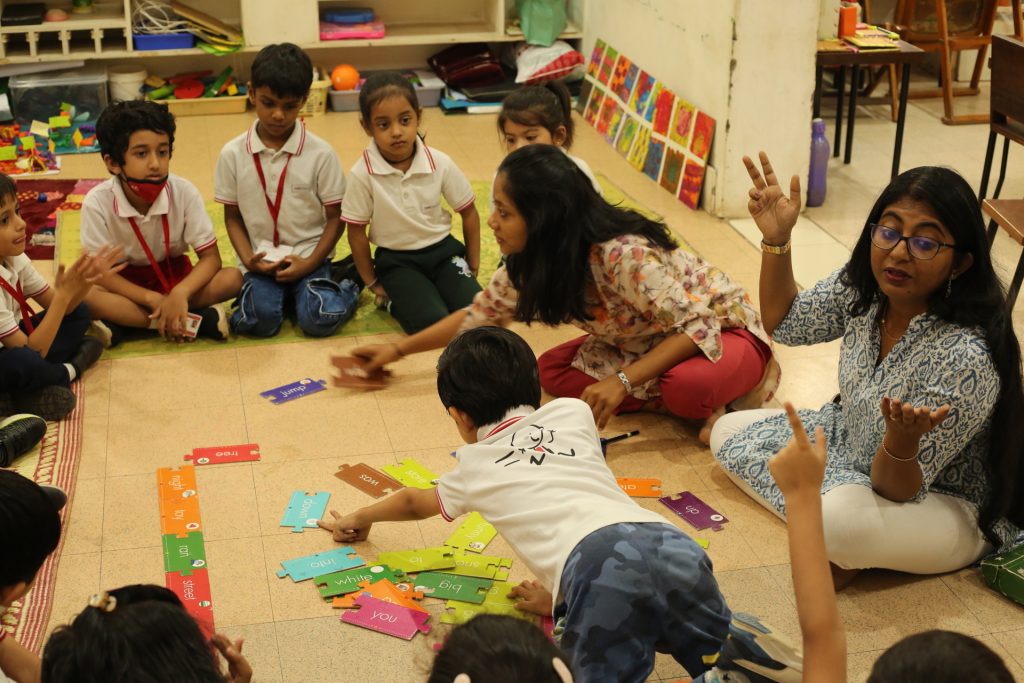 |
Brain development in the early years is both rapid and experience-dependent. A child’s brain is not simply maturing on a fixed biological schedule; it is being actively shaped by the quality of experiences and relationships the child encounters every day. When adults respond to a child’s needs with sensitivity and consistency such as when they talk to the child, listen to them, play with them, comfort them they help build strong neural connections that become the architecture for future learning, behaviour, and health. |
The reverse is equally true: a lack of responsive interaction, chronic stress, or overly rigid environments can disrupt this process. The brain builds its strongest pathways around what it experiences most often, so a child’s daily environment matters enormously, at home and at school.As parents, you are not simply caring for your child during these years but you are building their brain. Every dinner-table conversation and every bedtime story is foundational, not incidental.
All Domains of Development Matter and are Deeply Connected
It is tempting to think of a young child’s growth in separate compartments physical here, cognitive there, social skills somewhere else. But research is clear that these domains physical, cognitive, language, social, emotional, and creative are deeply interrelated. A child who is learning to share a toy with a peer is simultaneously developing language, practising emotional regulation, and building cognitive skills like perspective-taking. A child engaged in outdoor play is not just developing physically; they are learning to assess risk, solve problems, and cooperate with others.
This is why programmes that focus narrowly on early academic skills such as letter recognition, number work and writing drills while neglecting play, movement, social interaction, and creative expression, are doing children a disservice. They may produce short-term gains on specific measures, but they come at the cost of the broader developmental foundations that actually predict long-term learning and well-being.
A good programme treats the child as a whole, with an integrated curriculum where learning happens across all domains at once; through play, exploration, and meaningful interaction with peers and caring adults and does not rush children toward milestones they are not developmentally ready for.
Play is Not The Opposite of Learning, It is The Primary Vehicle For It
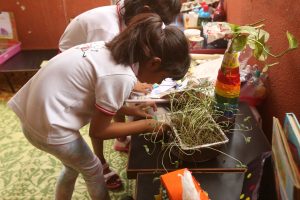
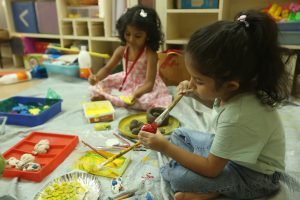
The most persistent misconception in early education is that play and learning are separate- that children play during breaks and learn during instruction. Research shows the opposite: for young children, play is the primary means through which learning occurs.
When a child builds with blocks, they are developing spatial reasoning, early mathematical thinking, and problem-solving skills. In pretend play such as running a restaurant or caring for a baby, they practise language, narrative thinking, perspective-taking, and the executive function skills that underpin all later academic learning. When they paint, draw, or make music, they develop fine motor control, creative thinking, and the ability to represent ideas in multiple ways.
None of this means that early childhood education should be unstructured or aimless. Good play-based programmes are intentionally designed: teachers plan environments that invite specific kinds of exploration, observe children closely, and extend their thinking. The difference is that the child’s curiosity and engagement drive the learning, rather than a predetermined worksheet.
Stress and Pressure are Not Preparation, They are Obstacles
Many believe that early academic pressure prepares children for the demands of later schooling. The impulse is understandable as the world is competitive. But the evidence runs the other way.
Young children who experience chronic stress, excessive pressure, or developmentally inappropriate expectations are more likely to develop anxiety around learning, lower self-esteem, and reduced motivation over time. The children who tend to thrive in the long run are those who develop a secure sense of themselves as capable learners, and that sense is built not through pressure, but through environments where they feel safe to explore, take risks, make mistakes, and try again.
An age-appropriate, stress-free environment is not a soft option; it is what children need to build the emotional resilience and intrinsic motivation to carry them through the more demanding years ahead.
What Parents can Look for and What They Can Do
When evaluating a programme, a few grounding questions help. Does this programme honour my child’s developmental stage, or is it trying to accelerate past it? Does it provide rich experiences across all domains of development (physical, cognitive, language, social, emotional, creative), or does it focus narrowly on academic readiness? Are the children visibly engaged, curious, and at ease or do they seem anxious, passive, or over-controlled? Is the learning environment warm, stimulating, and responsive or rigid and worksheet-driven?
At home, the principles are the same. Ensure your child’s basic needs such as sleep, nutrition, rest, and unstructured play are met; these are the preconditions for all meaningful learning. Use daily life as a learning opportunity: cooking together, walking in the neighbourhood, sorting laundry, telling stories at bedtime. Provide a range of open-ended materials and experiences rather than structured academic tasks. And perhaps most importantly, be present and responsive because the relationship between you and your child is the single most powerful influence on their development.
The early years do not come back. The choices we make during this period, as parents and as educators, shape not just what a child knows, but who they become. Getting those choices right requires resisting the pressure to rush, and trusting what we know about how children actually grow and learn.